Prosci Methodology

research

A Framework for Managing the People Side of Change

To remain competitive, organizations must continuously adapt and evolve. Yet initiatives such as technology implementations or process improvements often fall short when the focus remains solely on technical execution. Successful change requires equal attention to the people impacted—ensuring individuals understand, embrace, and adopt new ways of working. For more than 25 years, Prosci has conducted extensive research on how individuals experience change and how successful leaders guide transitions. Drawing on these best practices, Prosci developed a comprehensive change management methodology. When applied, it supports individuals as they move from the current state to the future state—driving stronger adoption and more successful project outcomes.

desktop-banner
Prosci Framework

The Main Components of the Prosci Methodology

The Prosci Methodology is one of the most widely used approaches to change management in the world, and it continues to evolve. In response to practitioner feedback and changing customer needs, and to prepare for future change trends, Prosci refreshed the methodology in 2021. The updated Prosci Methodology is more actionable and accessible, and they believe the enhancement will elevate client success in incredible ways.

Although the Prosci Methodology encompasses a variety of models, tools, assessments, processes and more, today it is comprised of three main components. Each component addresses a different dimension of change, creating a comprehensive approach for successful transformation.
01
P

PCT Model

A simple but powerful framework for establishing and connecting the most important aspects of any successful change effort. It helps align leadership, project management and change management around a shared definition of success.

02
A

ADKAR Model

A highly effective model for guiding individuals through the experiences—or elements—needed to make the change. It focuses on the individual journey and helps organizations build successful adoption.

03
3

Prosci 3-Phase Process

A structured, flexible framework for driving change at the organizational level. It provides a clear path for preparing for change, managing adoption and sustaining outcomes.

Together, these three components create a structured, scalable and adaptable approach to helping organizations achieve successful and sustainable change.
Structured • Scalable • Adaptable

PCT
Leadership
Sponsorship
Project
Change
PCT Model Prosci Framework
Prosci Framework

PCT Model

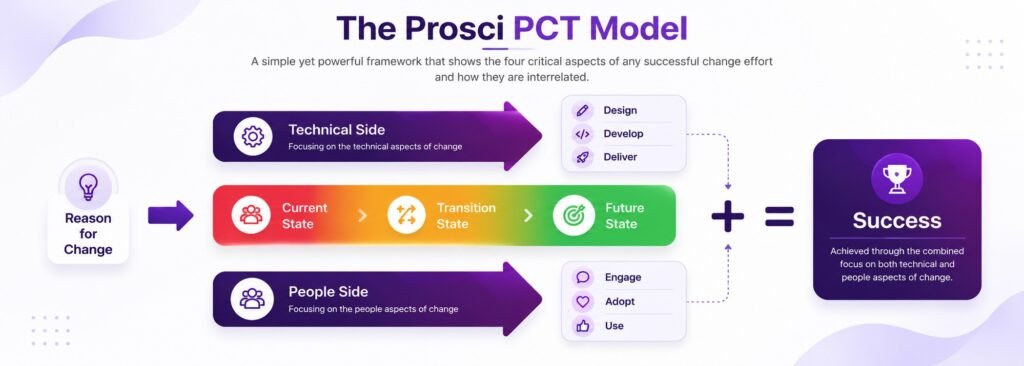
The Prosci Change Triangle (PCT) Model provides a simple framework for understanding the critical elements required for successful change. It shows how these elements work together to create meaningful and sustainable outcomes.

Why it matters

A successful change effort requires alignment between leadership and sponsorship, project management, and change management. The PCT Model helps bring these elements together around a shared definition of success.

01
Leadership & Sponsorship Provides direction, commitment and visible support throughout the change.
02
Project Management Defines and delivers the technical side of the change.
03
Change Management Enables people to adopt and use the change effectively.
04
Shared Success Connects people, process and business outcomes into one change effort.
ADKAR
Awareness
Desire
Knowledge
Ability
A
ADKAR Individual Change
Individual Change

ADKAR Model

ADKAR describes the five building blocks an individual needs to achieve successful change. The model places the impacted individual at the center of the change process.

The five building blocks

Individual success leads to organizational success. ADKAR helps practitioners understand where an individual is in their change journey and identify the support required to move forward.

A
Awareness Understanding why the change is needed.
D
Desire Choosing to participate and support the change.
K
Knowledge Knowing how to change and what to do differently.
A
Ability Demonstrating the capability to implement the change.
R
Reinforcement Reinforcing the change so that new behaviors are sustained over time.
01
Define Success
Assess Impact
Strategy
Sponsorship
01
Prepare The Approach
Phase 01

Phase 1 – Prepare Approach

The first phase positions the change for success by establishing a clear foundation, defining desired outcomes and developing the right approach for the organization.

Purpose

To position the change for success by developing a customized and scaled change management strategy with the necessary sponsorship and commitment.

01
Define Success Establish what successful change will look like.
02
Assess Impact Understand the change, organization and people affected.
03
Define Approach Develop the appropriate change management strategy and plans.
04
Build Commitment Establish sponsorship and organizational readiness.
02
Plan
Act
Track
Adapt
02
Manage The Change
Phase 02

Phase 2 – Manage Change

This phase focuses on moving individuals and the organization through the change by implementing targeted plans and supporting adoption throughout the transition.

Purpose

To achieve adoption and usage of the change by creating, implementing and adapting plan(s) that will move individuals and the organization through ADKAR transitions.

01
Plan Create targeted plans that support adoption.
02
Act Execute communications, coaching and enablement.
03
Track Performance Monitor progress, adoption and change outcomes.
04
Adapt Actions Adjust the approach based on feedback and results.
03
Review
Measure
Sustain
Ownership
03
Sustain Outcomes
Phase 03

Phase 3 – Sustain Outcomes

The final phase ensures that the change delivers lasting value and becomes embedded into everyday ways of working. It focuses on reinforcing adoption and maintaining results.

Purpose

To realize the value of the change by ensuring the change is adopted and the organization is committed and prepared to sustain the change.

01
Review Performance Evaluate whether the change is delivering expected results.
02
Activate Sustaining Reinforce behaviors and practices that support the change.
03
Transfer Ownership Move responsibility into the organization.
04
Sustain Results Embed the change into the fabric of the organization.
research

Structured, Scalable and Adaptable

The success of any organizational change depends on the success of change management in encouraging individuals to embrace, adopt and utilize a required change. The change management methodology itself must be structured enough to be repeatable, but also flexible enough to meet the needs of any organization. That’s the Prosci Methodology:

  • Structured – The Prosci Methodology takes what we know about people, change and results and organizes it into a simple process that practitioners can apply to develop change management strategies and plans that increase adoption and usage on a particular initiative.
  • Scalable and adaptable – You can adapt and flex the Prosci Methodology to achieve success in any type of change, where results and outcomes depend on adoption and usage, and in any type and size of organization.
research

Applying the Prosci Methodology

The Prosci Methodology enables organizations to manage change wisely. By doing so, it helps employees thrive through the changes they’re faced with and increases the returns on project investments.
You can learn how to apply the Prosci Methodology to change initiatives in your organization and become a Prosci Certified Change Practitioner by attending Prosci’s Change Management Certification Program. It’s an engaging, energizing 3-day learning experience that gives you the knowledge, tools and skills you need to successfully drive change in your organization.
Once certified, you’ll have anytime, anywhere access via the Prosci Portal to the Prosci Hub Solution Suite. It offers extensive digital content, resources and tools that help you apply change management throughout your project. Plus it supports you in learning and growing along the way.

research
research

An Introduction to Change Management Guide

The data is clear: even when organizational changes meet technical requirements and milestones, they can still fail to deliver results and benefits. What’s missing? Change management. Organizations that embrace change management are more likely to achieve project objectives, stay on or ahead of schedule, and stay on or under budget.

research
Scroll to Top